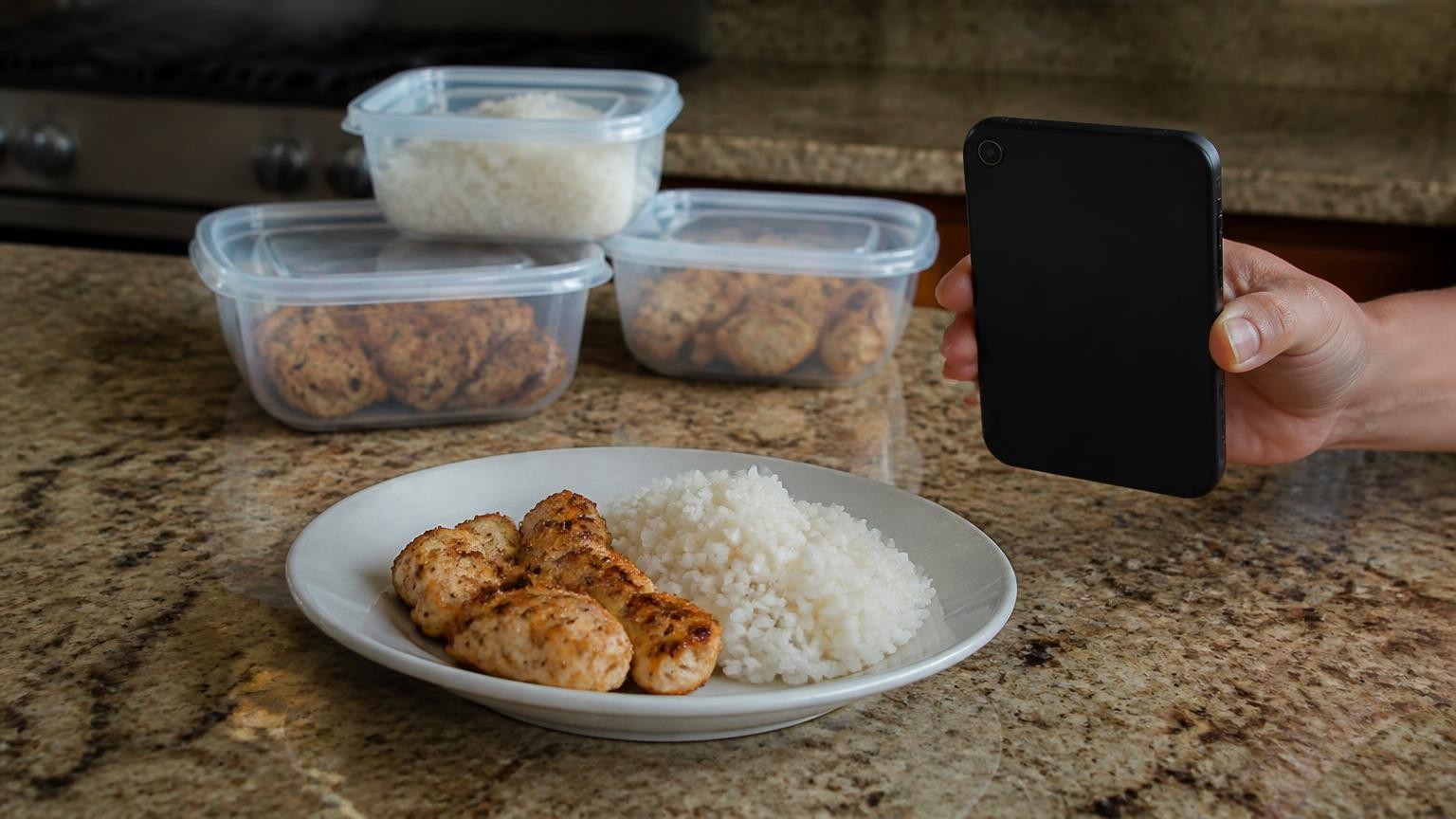
Count the recipe instead of the plate: note every ingredient as it goes into the pot, oil and butter included, look up each one in a food composition database, add them up, and take your share of the cooked dish by weight. When you did not cook the meal and cannot get the recipe, a photo of the plate gives you an estimate, and you add by hand the fat you know went into the pan.
Why is a home-cooked meal harder to count than a packaged one?
A packet does the arithmetic for you. A pot of chilli, a family curry or a tray of roasted vegetables has no label, and no two cooks make it the same way. Even your own recipe changes from week to week: a bigger onion, a second spoon of oil, a handful of cheese at the end.
Food scientists face the same problem on a larger scale. A Food and Agriculture Organization (FAO) training presentation on recipe calculation points out that mixed dishes and cooked foods make up the bulk of what people eat, and that analysing composite dishes in a laboratory is expensive because there are so many variations. So the people who compile nutrition tables calculate many dishes from their recipes instead. You can use the same method in your kitchen, in a simpler form.
How do I add up the calories for the whole pot?
Work out the total for everything you cooked first, and only then worry about your plate.
- Write down each ingredient as it goes in. Weigh it if you can. The British Nutrition Foundation's guide to portion sizes puts it plainly: if you want to measure accurately, the best way is to weigh your food.
- Use the label where there is one. The pasta, the tin of tomatoes, the cream and the stock cube all came with a nutrition panel. Those figures describe the exact product you used, which a generic entry cannot.
- Look up the rest in a food composition database. USDA FoodData Central is the US Department of Agriculture's food composition source, managed by the Agricultural Research Service's Beltsville Human Nutrition Research Center. It includes laboratory data on commodity and minimally processed foods (Foundation Foods) alongside historical values from analyses, calculations and published literature (SR Legacy). That makes it useful for ingredients that come without a label, such as loose vegetables, meat from the butcher or dried beans.
- Scale each value to the amount you used. Databases give values per 100 g. If you used 250 g of minced meat, multiply the per-100 g figure by 2.5.
- Add everything up. That is the energy in the whole pot, and you can work out protein, fat and carbohydrate the same way.
The FAO presentation lists common sources of error in recipe calculation. Three of them apply in any kitchen: forgetting to add the fat used for frying, using values per 100 g without adjusting for the actual weight, and matching an ingredient to the wrong food in the database.
How do I work out my share once it is cooked?
Do not divide by the raw weight of the ingredients. Cooking changes how much the food weighs. The USDA Table of Cooking Yields for Meat and Poultry explains that cooking yields describe changes in food weight due to moisture loss, such as evaporation or dripping, water absorption, such as boiling, and fat gained or lost during preparation and cooking. A sauce that simmers for an hour gets lighter. Rice and pasta get heavier as they take up water.
The calories stay roughly where they were, apart from fat that drips away or gets poured off; what changes is the weight they are spread over. So weigh the finished dish:
- Weigh the empty pot or dish before you start, or weigh it once and write its weight on a piece of tape underneath.
- When the food is cooked, weigh the pot again and subtract the empty weight. That is the cooked weight of the dish.
- Weigh your portion on a plate you have weighed empty.
- Your share is your portion's weight divided by the cooked weight. If the finished stew weighs 2,000 g and your bowl holds 400 g, you ate one fifth of the pot, so you take one fifth of its total.
If you have no scale, divide by the number of servings instead, and serve them as evenly as you can. It is rougher, but it is still built on what actually went into the pot.
Raw or cooked: which database entry should I pick?
Pick the entry that matches the state of the food when you weighed it. The USDA yields table explains that laboratory data for cooked foods are generally not available, so databases often calculate cooked values from the raw food, adjusted for the change in weight. Its formula is simple: yield in percent is 100 times the cooked weight divided by the raw weight.
In practice:
- Rice, pasta, lentils and oats: weigh them dry and use the dry or raw entry. Weighing cooked rice and using the dry entry counts the water as if it were rice.
- Meat and fish: weigh them raw and use the raw entry, because they lose moisture and some fat in the pan.
- Vegetables: raw weight with the raw entry is the simplest, and matches how you buy them.
Mixing the two is easy to do and hard to spot, because the dish looks the same either way.
What about the oil and butter?
Fat is the ingredient most easily left out of a homemade count, and it carries a lot of energy. According to the NHS, a gram of fat provides 9 kcal, while a gram of carbohydrate or protein provides 4 kcal. A little oil changes the total more than the same weight of vegetables or rice.
Treat every fat as an ingredient in its own right:
- Measure it. Pour oil into a spoon, not straight from the bottle into the pan. Weigh butter or cut it from a block with markings.
- Count the extras. A knob of butter stirred into mashed potatoes, cream added at the end, cheese grated over the top, a drizzle of oil on the salad: all of it goes on the list.
- Count what stays in the food. If you pour fat off a pan of mince, the fat you poured off is not in your bowl. If you are unsure how much, count all of it: an estimate that leans high is easier to live with than one that hides fat.
What if I have no scale, no recipe, or someone else cooked?
Not every meal comes with a recipe. Dinner at a friend's house, a container of leftovers or a dish your partner made without measuring all leave you starting from the plate.
Use hand and spoon measures. The British Nutrition Foundation's guide pairs simple measures with weights: about two handfuls of dried pasta or rice is 75 g, a baked potato the size of your fist is 220 g, and a piece of Cheddar the size of two thumbs together is 30 g. It also notes that portions measured with your hands vary with the size of your hands.
Ask the cook. How much oil went in, was there cream or butter in the sauce, how many people was the pot meant to feed? A question or two about fat can tell you more than a careful look at the plate, because cooked-in fat does not show.
Photograph the plate. A photo app can estimate the portion when you have nothing else. MagiScan gives calories, protein, fat and carbs from one photo of the plate. On iPhone 12 Pro and newer Pro models, the LiDAR sensor measures the volume of the portion in millilitres; on other iPhones, the portion is estimated from the photo. LiDAR measures volume, not calories: the calories and macros are AI estimates in every case, worked out from what the app recognises and its density. Neither the camera nor LiDAR can see oil or butter cooked into the food, so add those by hand, using whatever the cook told you. For how to take a photo that gives a better estimate, see How Do I Count Calories From a Photo of My Food?.
When should I not rely on these numbers?
A homemade count, whether you built it from the recipe or from a photo, is an estimate. Some decisions need more than that.
- Insulin dosing. Do not dose insulin from a calorie or carbohydrate estimate. Use the method your diabetes care team has given you.
- Allergies and intolerances. Neither a recipe total nor a photo tells you whether a dish contains an allergen. Ask the person who cooked it and check the labels of the ingredients.
- Eating disorders. If you have, or have had, an eating disorder, or counting makes you anxious, talk to a clinician and do not rely on a counting app or a spreadsheet.
Nothing here is dietary advice, and none of these methods can tell you how much you should eat; that is a question for a doctor or a registered dietitian.
For dishes you cook often, the work pays off once: weigh the ingredients the first time, note the total and the cooked weight, and next time you only need to weigh your bowl. For meals where you have no recipe, MagiScan gives you an estimate from a photo of the plate, and the oil and butter stay on your list to add by hand.
Frequently Asked Questions
Should I weigh ingredients raw or cooked?
Weigh them in the state you can match in the database, which is usually raw or dry. Then weigh the whole dish once it is cooked and use that cooked weight to work out your share. A raw entry paired with a cooked weight, or the other way round, throws the count off.
How do I count calories in a meal someone else cooked?
Ask how much oil, butter or cream went in, and how many servings the pot made. Estimate your portion with hand measures or a photo app, then add the fat by hand, because a camera cannot see it.
Can I track a homemade meal without a kitchen scale?
Yes, as a rougher estimate. Divide the recipe total by the number of even servings, or use hand and spoon measures for your portion. Measure oil with a spoon even when you weigh nothing else.
Can I use a homemade calorie estimate for insulin or allergy decisions?
No. These estimates are not suitable for insulin dosing or allergy decisions; follow your care team's advice and check ingredients with the cook. Anyone with an eating disorder should talk to a clinician rather than rely on a counting app.