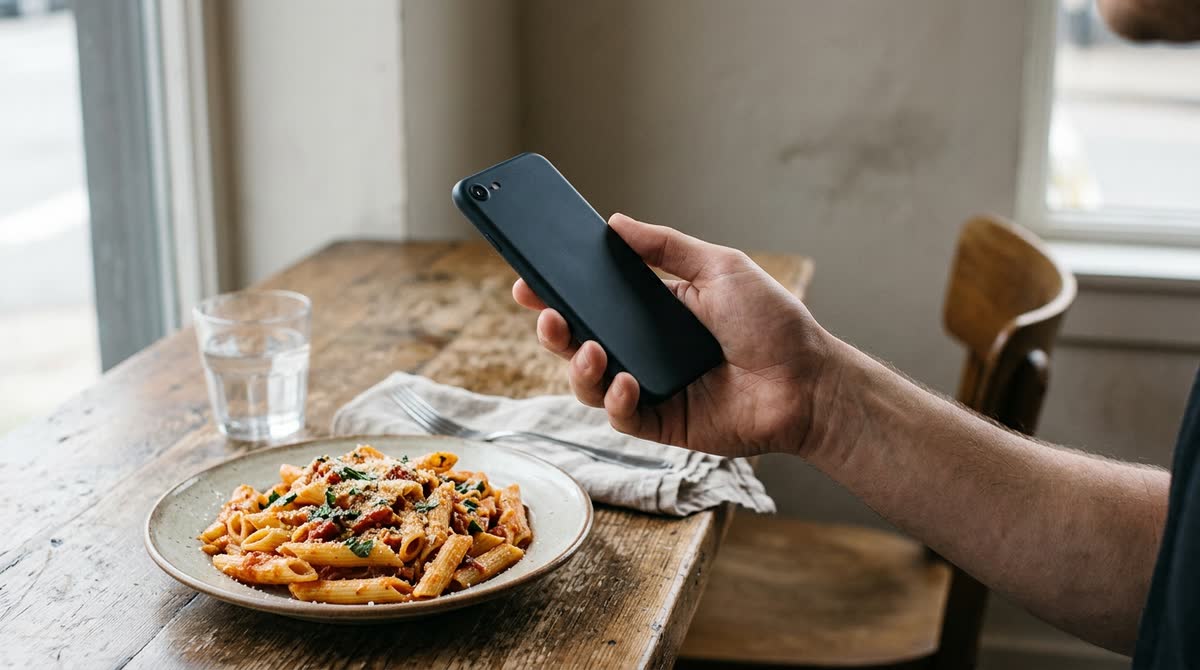
Size the protein foods on your plate, such as meat, fish, cheese, beans or yogurt, with your hand, a spoon or the pack they came in, then turn each portion into grams of protein with the label or a per-100 g food table, or let a photo app estimate it and correct what it gets wrong. Every figure you get this way is an estimate, so use the same method every day and check it against a label whenever you can.
Why is protein easier to estimate than calories?
Calories hide: oil soaked into vegetables or butter melted into rice changes a meal's energy without changing how it looks. Protein mostly sits in things you can see and count, such as the chicken breast, the salmon fillet, the eggs, the lentils or the pot of yogurt. On many plates one or two items, such as the meat or the beans, carry most of it, so getting those right takes you most of the way.
The rest comes in smaller amounts from foods people rarely think of as protein. The British Nutrition Foundation's protein page lists brown or white bread at 7.9 g of protein per 100 g, cooked pasta at 4.8 g and semi-skimmed milk at 3.5 g. A sandwich and a milky coffee add up over a day. So spend your effort on the main protein item, and log the supporting foods by habit, even roughly.
How can I size a portion without a scale?
Use your hand and your spoons. The British Nutrition Foundation's Get portion wise! guide gives hand-based portions with typical weights: a grilled chicken breast or a cooked fish fillet is about half the size of your hand, a portion of cooked beans, chickpeas or lentils is about 6 tablespoons, and a portion of cheddar is about the size of two thumbs together. Its tablespoon is a 10 ml spoon, the kind you eat soup with, not a serving spoon.
Put those weights next to the foundation's per-100 g protein figures, which it takes from McCance and Widdowson's The Composition of Foods (2015), and you have a working cheat sheet. The last column is plain arithmetic from the two sources, rounded:
| Food | Measure without a scale | Typical weight | Protein per 100 g | Protein in that portion |
|---|---|---|---|---|
| Grilled chicken breast, no skin | About half your hand | 120 g | 32.0 g | About 38 g |
| Lean grilled beef steak | About half your hand | 130 g | 31.0 g | About 40 g |
| Grilled salmon fillet | About half your hand | 100-140 g | 24.6 g | About 25-34 g |
| Canned chickpeas or boiled red lentils | About 6 tablespoons | 120 g | 7.2-7.6 g | About 9 g |
| Plain low-fat yogurt | About 4 tablespoons or one pot | 120 g | 4.8 g | About 6 g |
| Cheddar cheese | About two thumbs together | 30 g | 25.4 g | About 8 g |
| Almonds | What fits in your palm | 20 g | 21.1 g | About 4 g |
The guide adds two cautions: its portions are based on averages and may differ from what you see in shops and on packs, and hand sizes vary. If your hands are large, your half a hand of chicken weighs more than 120 g. To calibrate without a scale, compare your hand once with something that has its weight printed on it, such as a pack of cooked chicken pieces, and remember how it looked.
How do I turn a portion into grams of protein?
The label. On packaged food it beats any table. The US Food and Drug Administration explains that the Nutrition Facts label gives serving sizes in familiar units, such as cups or pieces, followed by the metric amount in grams, together with the number of servings in the package. So you can count instead of weigh: two slices, one pot, half the pack. Read the protein line in grams; the FDA notes that a percent Daily Value for protein is generally not required unless the product makes a protein claim.
A food composition table. For fresh food without a label, use a per-100 g table such as the one on the British Nutrition Foundation page, or your country's food composition database. Then multiply: 120 g of grilled chicken at 32.0 g per 100 g is 1.2 × 32, about 38 g.
Your own repeats. Most people repeat the same breakfasts and lunches. Work out the protein in those meals once, carefully, and reuse the number. A steady, slightly rough figure logged every day shows patterns better than a careful one logged twice a week.
Raw or cooked: which weight do I use?
Cooking changes weight. The USDA Table of Cooking Yields for Meat and Poultry explains that cooking yields describe changes in food weight due to moisture loss, water absorption (as in boiling) or fat gains and losses, and that nutrient values for cooked foods are often calculated from the raw food by applying those yields. A pack of raw chicken lists protein per 100 g of raw meat; the table above lists grilled chicken. Use a raw figure with a raw weight and a cooked figure with a cooked portion, never one with the other. For food on your plate, cooked figures and cooked hand measures are the pair to use.
Can a photo app work out the protein for me?
It can do the first two steps for you, recognising the foods and estimating the portion, and then look up the protein. Both steps can go wrong: the app can misread the food, and a flat photo has no depth to judge size from. In a study published in JMIR mHealth and uHealth in 2020, Herzig and colleagues at Bern University Hospital tested an app that used the depth sensor of an iPhone X on 48 meals whose food items had been weighed on a precision scale. Its protein estimates were off by 2.4 g per meal on average, a relative error of 13.0%, yet the limits of agreement for a single meal ran from -10.0 g to 13.4 g. Accuracy was lower for cooked meals, where foods touched or overlapped, than for breakfasts and snacks, where items sat apart. Those figures describe that one app, in a 2018 software version, on hospital-kitchen meals, not photo apps in general, but the lesson carries: a photo estimate is useful for a trend, while a single meal can still be off by a meaningful amount.
MagiScan, which that study did not test, follows the same steps: it gives calories, protein, fat and carbs from one photo of a plate. On iPhones with a LiDAR sensor (iPhone 12 Pro and newer Pro models), it measures the volume of the portion in millilitres; on other iPhones the portion is estimated from the photo. A measured volume is not a protein count. The protein figure is an AI estimate based on what the app recognises and that food's density, so if it reads chicken thigh as breast, or Greek-style yogurt as plain, the error carries through. Like any camera, it cannot see oil or butter cooked into or hidden under the food, so add those by hand if you track calories too; How Do I Count Calories From a Photo of My Food? covers that side.
To get a better estimate from any photo app:
- Photograph the plate before you eat, with all of it in the frame.
- Keep the protein item apart where you can: chicken next to the rice, not buried in it.
- Check what the app recognised. Where it misread a food, or where you have the label portion, log your own figure for that item instead.
- Add protein you cannot see as a separate item yourself: protein powder stirred into oats, cheese inside a sandwich.
What mistakes throw a protein estimate off?
- Logging the whole dish instead of your share. A pot of chilli or a tray of lasagne feeds several people. Estimate your plate, not the pan.
- Forgetting the supporting foods. The portion guide counts one medium glass of milk as 200 ml; at 3.5 g per 100 g for semi-skimmed milk, that is about 7 g of protein that never looks like protein.
- Naming foods loosely. Some swaps barely matter: the British Nutrition Foundation lists plain Greek-style yogurt at 5.7 g per 100 g and plain low-fat yogurt at 4.8 g. Others matter a lot: cheddar at 25.4 g against cottage cheese at 9.4 g. Log the food you actually ate.
- Trusting the front of the pack. Log the grams on the label, not the high-protein claim.
- Changing method every few days. Stick with one set of hand measures, one table and one app, so your numbers stay comparable from week to week.
When is an estimate not good enough?
For everyday tracking a consistent estimate does the job. Some decisions need more:
- A protein amount set for a medical reason. Follow the method your doctor or dietitian gives you, which may include weighing.
- Insulin dosing. Macro figures from a photo or a hand measure are estimates. Do not use them to dose insulin; use labels, weighed portions and the plan from your diabetes care team.
- Allergies and intolerances. Recognising a dish says nothing reliable about whether it contains an allergen. Ask the kitchen and read the label.
- Eating disorders. If you have, or have had, an eating disorder, or counting makes you anxious, talk to a clinician and do not rely on a counting app.
How much protein you personally need is a question for a doctor or a registered dietitian; this article gives no target.
Start with the main protein item, size it with your hand or the pack, turn it into grams with the label or a per-100 g table, and log the bread and milk around it by habit. If you would rather take a photo, MagiScan estimates protein along with calories, fat and carbs, and on a LiDAR iPhone it measures the portion instead of judging it from a flat picture; check what it recognised, and where you know better, use your own figure.
Frequently Asked Questions
Is my hand a reliable way to measure protein portions?
It is a reasonable guide, not a measurement. The British Nutrition Foundation's guide puts a grilled chicken breast at about half the size of your hand, around 120 g, but hand sizes vary, so check yours once against a labelled pack.
Should I log meat by its raw or cooked weight?
Either, as long as the figure matches. A raw pack label gives protein per 100 g of raw meat, while tables for grilled food give it per 100 g of cooked food, and cooking changes weight through water and fat, so mixing the two skews the result.
Can an app tell me how much protein is on my plate from a photo?
It can estimate it. Apps recognise the food, estimate the portion and look up the protein; on iPhone 12 Pro and newer Pro models, MagiScan measures the portion's volume with LiDAR, but the protein figure is still an AI estimate. Check what it recognised, and use your own figure where you know the food or the portion better.
Can I rely on a protein estimate for medical decisions?
No. Estimates are for spotting patterns, not for insulin dosing, allergy decisions or a protein amount set for a medical condition; follow your care team's method for those. If you have, or have had, an eating disorder, talk to a clinician rather than relying on a counting app.