Start with what the restaurant publishes: large chains in the US and large food businesses in England must show calories on the menu. Where there is no number, split the plate into its parts, estimate each portion, match each part to a database entry or a photo estimate, and add an allowance for the oil, butter and sauce you cannot see.
Does the restaurant already have calorie information?
Check before you estimate anything, because a published figure is a better starting point than a guess.
In the United States, the FDA's menu labeling requirements apply to restaurants and similar retail food establishments that are part of a chain with 20 or more locations operating under the same name and offering substantially the same menu items. They must show the number of calories in standard items on menus and menu boards. On request, they must also provide written nutrition information for standard menu items, including total calories, total, saturated and trans fat, cholesterol, sodium, total carbohydrates, sugars, fibre and protein. The compliance date for the rule was 7 May 2018.
In England, the Calorie Labelling (Out of Home Sector) (England) Regulations 2021 came into force on 6 April 2022. According to the government's implementation guidance, they apply to businesses with 250 or more employees, which must display the energy content of food in kilocalories, state the portion size it refers to, and show it clearly at the point where you choose.
Know what these figures leave out. The English guidance exempts food that is on the menu for fewer than 30 consecutive days and 30 days in a year, condiments you add to the food yourself, and food you ask to have made differently from the way it is usually prepared, such as extra cheese on a burger when that is not a menu option. So a short-lived special, the mayonnaise you squeeze on your chips yourself and a change made at your request may all come without a number. A small independent restaurant on either side of the Atlantic may publish nothing at all.
How far can I trust the number on the menu?
Reasonably well on average, less so for a single dish. When researchers at Tufts University measured 269 food items from 42 quick-serve and sit-down restaurants in Massachusetts, Arkansas and Indiana between January and June 2010, they found that the stated calories were accurate overall, but that some individual foods were well off. As ScienceDaily reported on the study, published in JAMA on 20 July 2011, 19% of the foods contained more than 100 kcal per portion above the stated figure, and foods with lower stated energy tended to contain more than stated.
The authors suggested that poor quality control of portion size may be one reason, especially in sit-down restaurants, and it is easy to picture. A menu figure describes the standard recipe and the standard portion. The cook on a busy evening may use a bigger ladle of sauce, a heavier hand with the oil or an extra scoop of rice. Treat the printed number as a sound starting point, and add what you put on top yourself: dressing, extra sauce, butter for the bread.
How do I estimate a meal that has no calorie information?
Break the plate into parts you can picture separately, then estimate each one.
- Name the components. A typical plate has a protein, a starch, vegetables, a sauce or dressing, and extras such as bread, a side or a drink. Write them down as separate items rather than as one dish called "chicken pasta".
- Estimate each portion. Compare it with portions you know from home: the bowl of rice you usually serve, a chicken breast you have cooked, a glass you know the size of. A photo of the plate helps here; more on that below.
- Match each part to a database entry. Use a food composition database such as USDA FoodData Central, or the generic entries in your usual tracker. Entries for whole restaurant dishes can be closer than you might expect: in a 2016 US study published in the Journal of the Academy of Nutrition and Dietetics, researchers measured restaurant foods in the laboratory and compared them with matching restaurant entries in the USDA's Standard Reference nutrient database. For the nine dishes the database had measured entries for, its values were on average 15 kcal per food, or 2.3%, lower than the laboratory figure, a difference that was not statistically significant.
- Add the fat and the extras. Oil in the pan, butter on the vegetables, the dressing, the bread and butter, the sugar in a drink. These are separate items, covered in the next section.
- When unsure between two sizes, pick the larger. The authors of the 2016 study describe large portions as typical of many restaurants, and the next section shows what that looked like in their data.
In that comparison the database was not the weak point. The harder parts are the size of your portion and the fat you cannot see, which the next two sections cover.
Why do restaurant meals often come out higher than expected?
Two things push a restaurant plate up: the size of the portion and the fat used in cooking.
Portions. The same 2016 study measured frequently ordered meals bought between 2011 and 2014 from non-chain restaurants in San Francisco, Boston and Little Rock. They contained 1,205 ± 465 kcal per meal on average, an amount not significantly different from equivalent meals at large chains, and three of the four most popular cuisines, American, Italian and Chinese, had the highest mean energy at 1,495 kcal per meal. In other words, the independent restaurants in that study, which published no nutrition information, served about as much energy as comparable meals from large chains.
Fat. Restaurant cooking often involves oil and butter you never see. According to the NHS, a gram of fat provides 9 kcal, against 4 kcal for a gram of carbohydrate or protein. A spoon of oil in the pan or a knob of butter melted over the vegetables moves the total more than the same weight of almost anything else on the plate, and neither shows up in how the dish looks.
Practical allowances when you log the meal:
- Fried, sautéed, roasted or glazed: add an entry for cooking oil or butter, even if the amount is a guess.
- Creamy sauces and dressings: log them as their own item. Ask for dressing on the side and log what you actually use.
- Bread, chips and shared starters: count the share you ate.
- Drinks: count everything except plain water and unsweetened black tea or coffee.
Can a photo of the plate help with the portion?
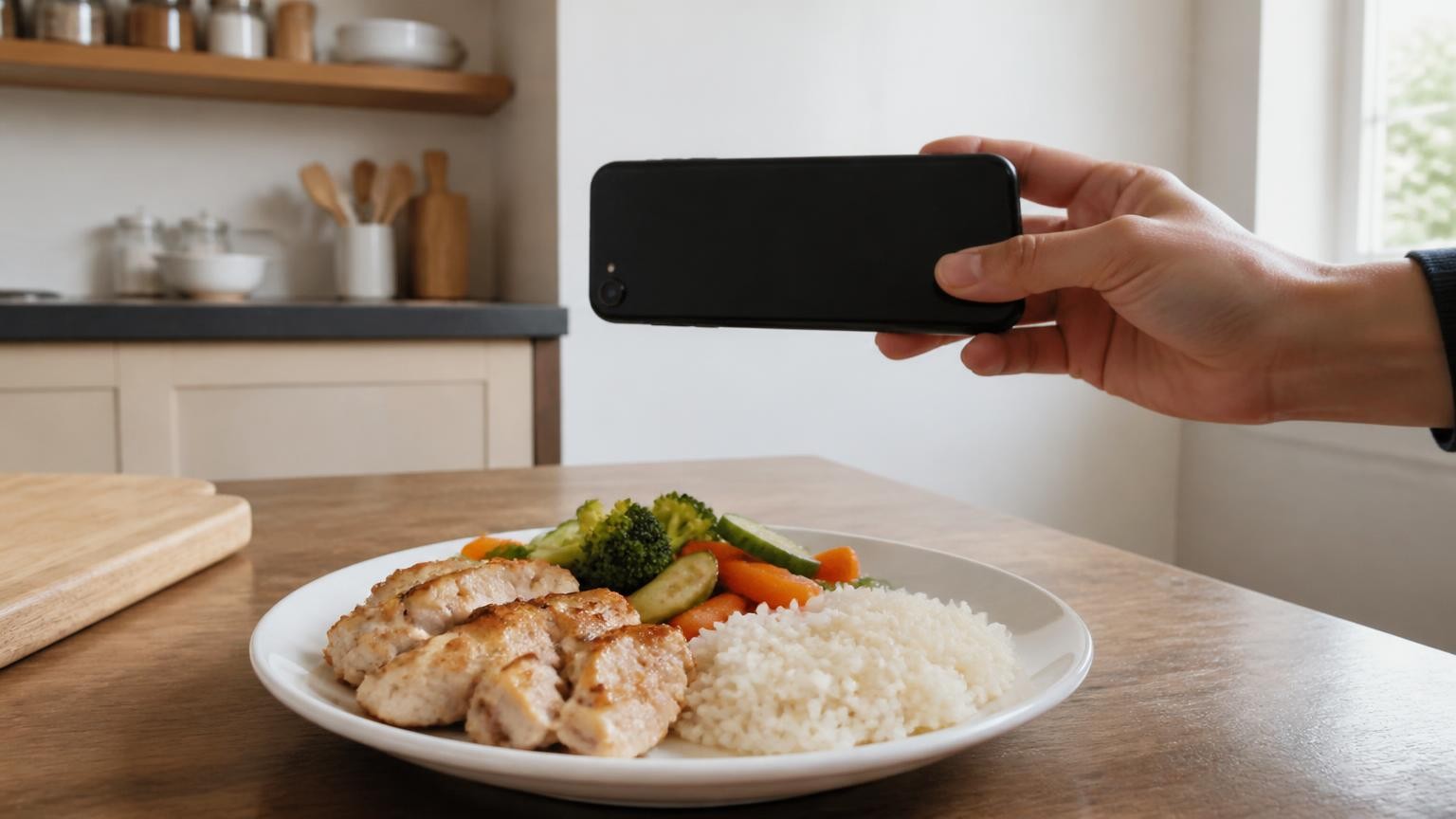
It can help with the portion. MagiScan gives calories, protein, fat and carbs from one photo of the plate. On iPhone 12 Pro and newer Pro models, the phone's LiDAR sensor measures the volume of the portion in millilitres; on other iPhones, the portion is estimated from the photo.
A few habits make a restaurant photo more useful:
- Take it before the first bite, with the whole plate in the frame.
- Photograph your own plate after serving yourself from shared dishes, not the serving platter.
- Keep sauces and sides visible rather than hidden under the main item where you can.
- Look at what was recognised: a wrong guess about the food carries through to the calories.
There is more on taking a useful food photo in How Do I Count Calories From a Photo of My Food?
Be clear about what the photo cannot do. LiDAR measures volume, not calories: the calories and macros are AI estimates in every case, worked out from what the app recognises and its density. Neither the camera nor LiDAR can see oil or butter cooked into or hidden under the food, so the allowances from the previous section still go in by hand.
When should I not rely on a restaurant estimate?
A restaurant estimate, from the menu, a database or a photo, is good enough for noticing patterns: which dishes are heavy, how often you eat out, what the bread basket adds. Some decisions need more than that.
- Insulin dosing. Do not dose insulin from an estimate of a restaurant meal. Follow the method your diabetes care team has given you.
- Allergies and intolerances. A menu figure, a database entry or a photo says nothing reliable about allergens. Ask the staff, every time.
- Eating disorders. If you have, or have had, an eating disorder, or counting makes eating out stressful, talk to a clinician and do not rely on a counting app. In England, the government guidance allows businesses to hand you a menu without calorie information if you ask for one, at their discretion.
This is not dietary advice, and none of these methods can tell you how much you should eat; that is a question for a doctor or a registered dietitian.
Use the published number where there is one, build your own estimate part by part where there is not, and always add the fat you cannot see. If you eat out with an iPhone 12 Pro or a newer Pro model, MagiScan measures the volume of the portion with LiDAR rather than judging it from the photo alone, and the oil and butter remain yours to add.
Frequently Asked Questions
Do all restaurants have to show calories on the menu?
No. In the US the FDA rule covers chains with 20 or more locations, and in England the rules cover businesses with 250 or more employees. Smaller and independent restaurants may publish no calorie information at all.
Are the calories printed on a menu accurate?
On average they tend to be close, but single dishes can be well off. In a 2011 study of restaurant foods, 19% contained more than 100 kcal per portion above the stated figure. Add anything you put on yourself, such as dressing or extra sauce.
How do I allow for oil and butter in restaurant food?
Assume there is added fat in anything fried, sautéed, roasted, glazed or dressed, and log it as a separate item even if the amount is a guess. A photo cannot show it, so it always goes in by hand.
Can I use a restaurant calorie estimate for insulin or allergy decisions?
No. An estimate is not suitable for insulin dosing, and it says nothing about allergens, so ask the staff and follow your care team's advice. Anyone with an eating disorder should talk to a clinician rather than rely on a counting app.