Most of the savings come from knowing a shipment's real dimensions before the carrier measures it: parcel prices depend on dimensional weight and size fees, LTL freight class is set by density, and every wrong dimension you declare comes back as an adjustment or a fee. The rest comes from smaller cartons and better records of what you shipped and received, with one limit: a phone scan is a planning and checking tool, while dimensions you bill your own customers on belong on a certified dimensioner.
Below is where each of those savings sits, a worked example of how a few inches change a parcel's price, and the order in which to go after them.
Which logistics costs depend on the size of what you ship?
Four lines on a typical freight and parcel bill move with dimensions rather than weight alone.
Dimensional weight. USPS prices Priority Mail Express, Priority Mail, USPS Ground Advantage and Parcel Select packages larger than 1 cubic foot (1,728 cubic inches) by dimensional weight whenever it exceeds the actual weight, using length × width × height ÷ 139, as its Automated Package Verification page explains. Other carriers publish their own dimensional weight rules, so check the divisor in your carrier's rate guide rather than assuming 139.
Size surcharges. The same USPS page, as checked on 29 October 2026, lists nonstandard fees: for a package more than 2 cubic feet (3,456 cubic inches), $21.00 on USPS Ground Advantage and $35.00 on Priority Mail, plus separate fees for packages between 22 and 30 inches long and more than 30 inches long.
Corrections after the fact. USPS Automated Package Verification catches certain postage discrepancies during processing and credits or debits the shipper directly. If you ship through Click-N-Ship or a PC Postage platform and omit or misstate dimensions, or skip the dimensional weight price when it applies, USPS charges a dimension-noncompliance fee of $3.00.
LTL freight class. Old Dominion's NMFC resource page notes that on 19 July 2025 the classifications in NMFTA Docket 2025-1 moved from commodity-based to density-based, measured in pounds per cubic foot, and that non-compliant classifications can lead to rate adjustments and clerical fees.
If your warehouse also charges or pays for storage by cubic volume, that is a fifth line. In each case the money is lost the same way: someone guessed the size, rounded it the wrong way, or measured the product instead of the packed unit.
How much can a few inches change a parcel's price?
The USPS rule, spelled out for Priority Mail in DMM section 123, is precise enough to calculate by hand: round each dimension up to the next whole inch, multiply, and if the result exceeds 1,728 cubic inches, divide by 139 and round up to the next pound. Here is the same 9 lb product in four cartons, with the USPS Ground Advantage volume fee from the verification page:
| Carton (inches, rounded up) | Cubic inches | Dimensional weight | Billed as | Over 2 cubic feet? |
|---|---|---|---|---|
| 20 × 16 × 12 | 3,840 | 28 lb | 28 lb | Yes, $21.00 fee |
| 18 × 16 × 12 | 3,456 | 25 lb | 25 lb | No, exactly 2 cubic feet |
| 16 × 12 × 10 | 1,920 | 14 lb | 14 lb | No |
| 14 × 11 × 11 | 1,694 | Does not apply | 9 lb actual | No |
Two things stand out. Two inches off the first carton's length removes the nonstandard volume fee, because the fee applies only above 3,456 cubic inches. And the last carton escapes dimensional pricing altogether, because its rounded volume stays under 1,728 cubic inches.
The rounding rule cuts both ways. A carton that measures 15.2 × 11.1 × 9.4 inches holds about 1,586 cubic inches, under the threshold. Rounded up, it becomes 16 × 12 × 10, which is 1,920 cubic inches and 14 lb of dimensional weight. Precise measuring alone does not save money here. Designing the carton so its rounded dimensions fall under the threshold does.
That is where scanning the product, rather than the box, pays off. A 3D scan of the item gives you its true envelope, including handles, bulges and protruding parts, so you can choose the smallest carton that fits with the padding you need. Our guide on using 3D scanning to optimize e-commerce packaging covers that workflow step by step.
Irregular items deserve a separate check. For nonrectangular parcels, DMM 123 measures length, width and height at their extreme points and then multiplies the product by an adjustment factor of 0.785 before applying the threshold and the divisor. A tube, a coiled hose or an odd-shaped part can price very differently from the box you would otherwise put it in.
Why does LTL freight class depend on accurate pallet dimensions?
Since density sets the class, the class depends on your dimensions as much as on your scale. Density is the shipment weight divided by its cubic feet, and cubic feet are length × width × height in inches divided by 1,728.
Take a 600 lb pallet. Recorded as 48 × 40 × 44 inches, it occupies about 48.9 cubic feet, a density of roughly 12.3 lb per cubic foot. If the real height, including the pallet and the top layer, is 50 inches, it occupies about 55.6 cubic feet and the density drops to roughly 10.8. Lower density means a higher class, so the bill of lading understated the class, and the carrier's correction can arrive later, possibly with a clerical fee.
The ODFL page recommends that shippers capture the precise weight, dimensions and density of their shipments and update them in their TMS and eBOL settings. The 13-subprovision density scale it describes added classes 50 and 55, which could lower rates for heavier, compact freight, so accurate dimensions can also move a shipment into a cheaper class rather than only protect you from corrections.
Measure pallets the way the carrier will: at the outermost points, including overhang, the pallet itself and anything strapped on top. Our article on 3D scanning for freight dimensioning goes into capturing irregular and mixed loads.
Can a phone 3D scan replace a certified dimensioner?
Not for the dimensions you charge customers on. NIST Handbook 44 Section 5.58, Multiple Dimension Measuring Devices applies to dimension and volume measuring devices used to calculate freight, storage or postal charges, including those that measure irregularly shaped objects, and sets their maintenance and acceptance tolerance at plus or minus one division. If a 3PL invoices storage by cubic foot or a carrier rates freight on a device's reading, that device falls under this code.
Phones measure differently. Apple's own guide to the Measure app recommends well-defined objects 0.5 to 3 meters from the iPhone and states plainly that measurements are approximate. That is fine for the jobs where most of the savings sit:
- deciding carton sizes and checking which SKUs sit near a pricing threshold;
- measuring irregular or oversized items a fixed dimensioner cannot handle;
- checking a pallet or a one-off shipment before the bill of lading is written;
- recording the shape and condition of freight at receiving.
A phone app such as MagiScan, which turns an iPhone or Android phone into a 3D scanner and measuring tool, fits these jobs because it goes wherever the item is: the receiving dock, a supplier's floor, a customer site. A fixed dimensioner fits the high-volume outbound line, where every parcel passes the same point. Our comparison Do I Need a 3D Scanner or Is a Phone App Enough? covers the equipment side in more detail.
How do you start capturing the savings?
Begin with the bills, not the scanner. The order below finds the money first and measures second.
- Pull three months of carrier invoices and list every adjustment: USPS verification debits, dimension-noncompliance fees, LTL reclassifications and inspection corrections. Group them by SKU or lane.
- Rank SKUs by the gap between actual and billable weight. Light, bulky items with a large gap are where carton changes pay most.
- Measure the packed unit, not the product sheet. Record each dimension rounded up to the next inch, as the carrier will, and store it in your product master and TMS so labels and bills of lading use it automatically.
- Redesign cartons for the worst offenders using the thresholds above: 1,728 cubic inches, 2 cubic feet, the 22-inch and 30-inch length limits, or your carrier's equivalents.
- Spot-check outbound shipments against the stored dimensions, and re-measure whenever a supplier changes packaging.
- Scan freight that arrives damaged before it is broken down. A 3D record of the load's shape at receiving shows the damage in a form you can measure and share with the carrier; see 3D scanning for freight damage assessment.
Steps 1 and 2 tell you which SKUs and lanes produce the adjustments. Start with those, and the scanning effort stays proportional to the money it recovers.
What mistakes cancel out the savings?
The same few errors show up again and again.
- Measuring the product instead of the carton. The carrier bills the outer dimensions of what it handles, including padding and bulges.
- Rounding down. USPS rounds each dimension up to the next whole inch before multiplying; a declared 15 × 11 × 9 for a 15.2 × 11.1 × 9.4 carton is a future adjustment.
- Forgetting the pallet and overhang. For LTL, the cubic feet include the pallet and anything that sticks out past its edges.
- Treating one phone reading as a billing value. Approximate measurements are for decisions and checks. A device used to calculate charges falls under Handbook 44.
- Stale master data. A supplier's new inner pack or a switch to a different carton changes every dimension downstream, and the old values keep generating corrections until someone updates them.
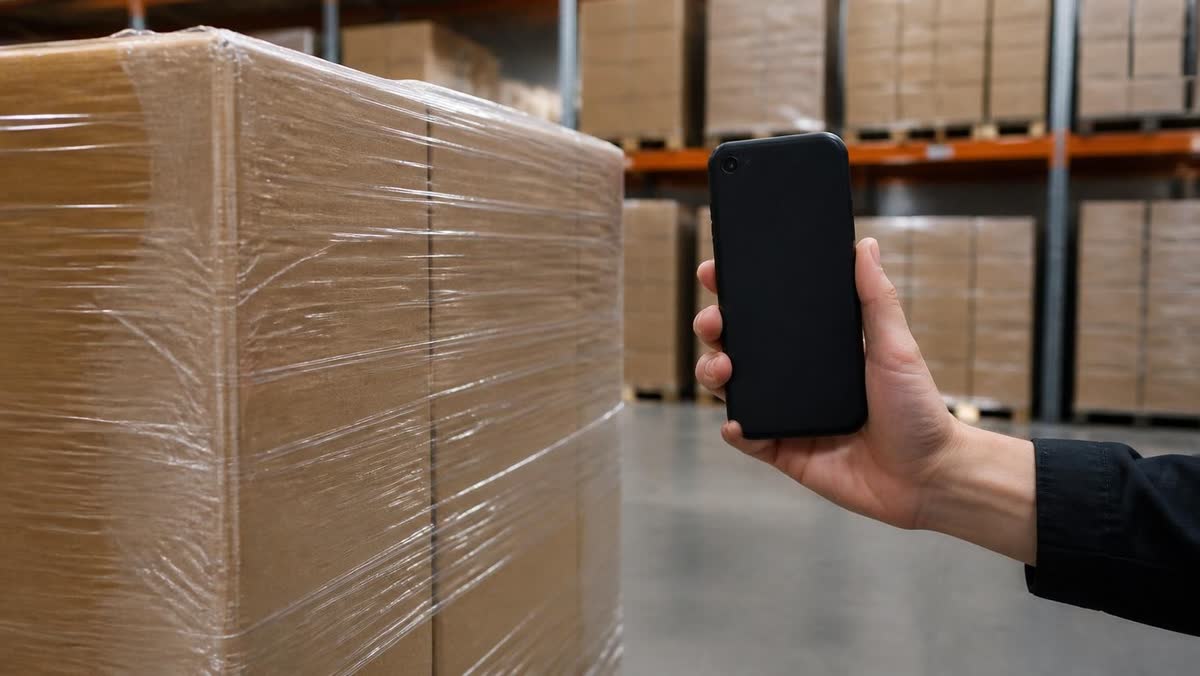
- Measuring through stretch film and glossy wrap. Camera-based measurement works best on hard, well-defined edges, so measure the carton corners rather than loose film.
The savings from 3D scanning in logistics are real, but they come from ordinary arithmetic applied consistently: true dimensions, rounded the way the carrier rounds them, stored where your labels and bills of lading pick them up. A scanning app like MagiScan makes the measuring step portable; the thresholds and the invoice review decide where it pays.
Frequently Asked Questions
Does 3D scanning reduce dimensional weight charges?
Scanning does not change the formula, but it gives you the true size of the item so you can pick a smaller carton and declare correct dimensions. Under the USPS rule, a carton whose rounded dimensions stay at or under 1,728 cubic inches is billed by actual weight, and correct dimensions avoid the $3.00 dimension-noncompliance fee on Click-N-Ship and PC Postage labels.
How precise do shipping dimensions need to be?
For labels, measure to the inch and round each dimension up, because USPS rounds up before calculating dimensional weight. For dimensions you invoice customers on, the measuring device falls under NIST Handbook 44 Section 5.58, with a tolerance of plus or minus one division.
Can I use a phone scan to set the freight class on an LTL shipment?
You can use it to estimate density and fill in the bill of lading with real dimensions instead of guesses, which matters more since NMFC classification moved to density on 19 July 2025. The carrier may still measure the shipment itself, so record the outermost points, including the pallet and any overhang.
Which items gain the most from scanning instead of a tape measure?
Irregular items gain the most, because USPS measures nonrectangular parcels at their extreme points and applies a 0.785 factor, and a tape measure easily misses a handle or a bulge. Bulky, light products near a size threshold come next, since a one-inch change can move them across a fee line.