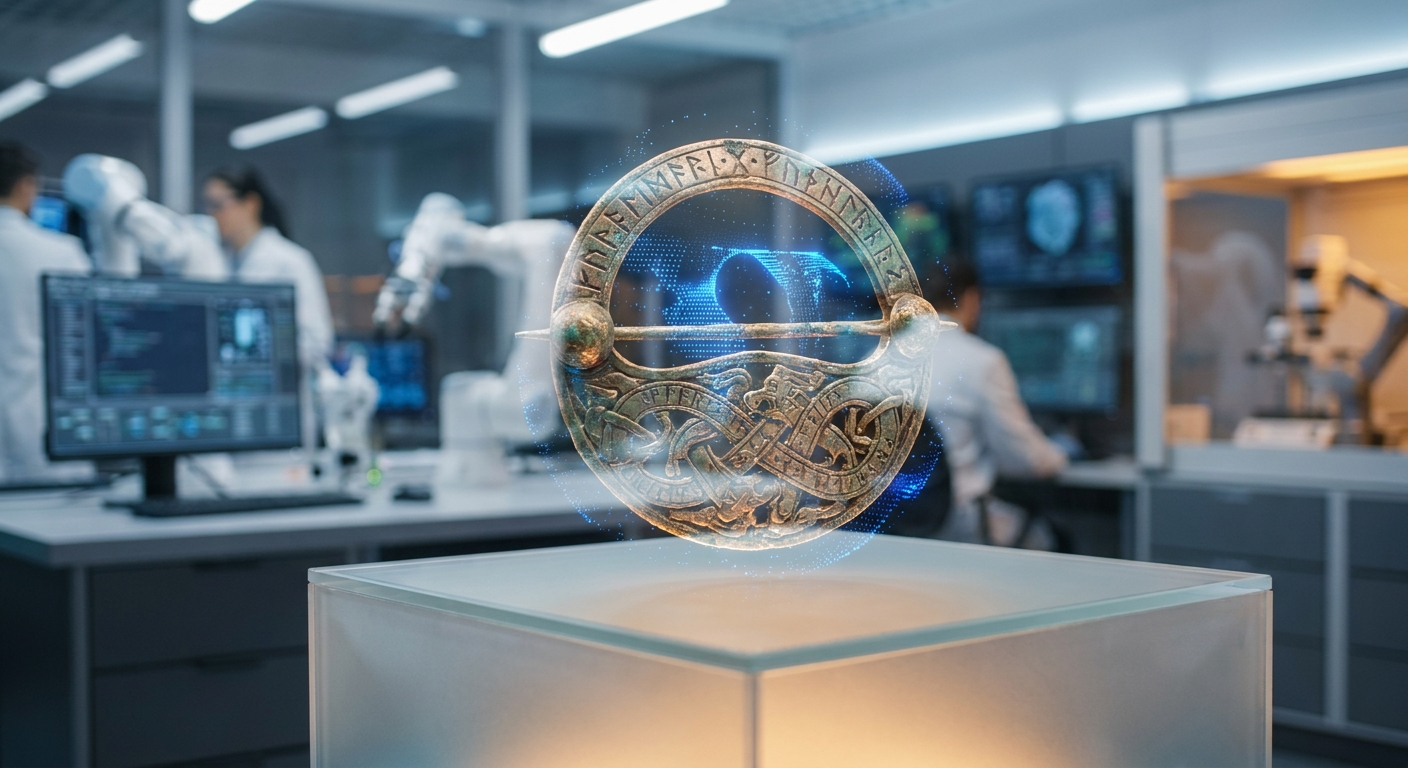
3D Scanning Heritage Preservation in 2026: Safeguarding Our Past for the Future with MagiScan
3D scanning heritage preservation in 2026 is revolutionizing how historical artifacts, sites, and cultural assets are documented, protected, and made accessible, with advanced technologies like MagiScan offering unprecedented accuracy and detail. The global market for 3D scanning technology is projected to reach $14.2 billion by 2027, underscoring its growing importance across diverse sectors, including cultural heritage. This article explores the critical role of 3D scanning in preserving our collective past, detailing its benefits, applications, and the transformative impact of solutions like MagiScan for institutions and individuals alike.
Key Takeaways
- 3D scanning provides non-contact, high-fidelity digital replicas of historical artifacts and sites, crucial for preservation and research.
- Digital archives created via 3D scanning enable virtual access, democratizing heritage and protecting against physical degradation.
- MagiScan's advanced features, such as its portable design and rapid data capture, make it ideal for on-site heritage documentation.
- The technology facilitates detailed condition assessments, structural analysis, and restoration planning for fragile heritage assets.
- 3D models are vital for educational purposes, virtual tourism, and the creation of immersive historical experiences.
- Integrating 3D scanning with AI and cloud platforms enhances data management, analysis, and long-term accessibility.
Why is 3D Scanning Essential for Heritage Preservation Today?
3D scanning is indispensable for heritage preservation in 2026 because it offers a non-destructive, highly accurate method for creating digital twins of invaluable cultural assets, thereby safeguarding them against physical decay, disaster, and loss. The ability to capture intricate details down to sub-millimeter precision ensures that even the most fragile or complex objects and sites are documented with unparalleled fidelity. This digital record serves as a permanent backup, a research tool, and a foundation for future conservation efforts.
How Does 3D Scanning Capture Historical Data?
3D scanning captures historical data by using light, lasers, or structured patterns to measure the geometry of an object or environment. These systems emit light or laser beams and analyze the reflected patterns to calculate precise distances and surface contours. This process generates a dense point cloud, which is then processed into a mesh or 3D model. Technologies like MagiScan utilize advanced sensors and intelligent algorithms to rapidly acquire this data, ensuring comprehensive coverage and high resolution, even for large or complex structures.
What Are the Primary Benefits of Using 3D Scanning for Heritage?
The primary benefits of using 3D scanning for heritage preservation include unparalleled accuracy, non-destructive documentation, and enhanced accessibility. Unlike traditional methods, 3D scanning captures every surface detail without physical contact, preventing damage to delicate artifacts. The resulting digital models serve as a permanent, high-fidelity record, invaluable for research, education, and restoration. Furthermore, these digital assets can be shared globally, democratizing access to cultural heritage and protecting it from physical threats.
How Does 3D Scanning Facilitate Non-Destructive Documentation?
3D scanning facilitates non-destructive documentation by employing technologies that measure surfaces without physical contact. Techniques like photogrammetry, laser scanning, and structured light scanning emit light or sound waves and analyze their reflections to build a 3D model. This means that fragile manuscripts, ancient pottery, delicate frescoes, or even entire historical buildings can be digitized with extreme precision without any risk of abrasion, breakage, or chemical alteration.
What Types of Heritage Assets Can Be Preserved with 3D Scanning?
Virtually any type of heritage asset can be preserved with 3D scanning, ranging from minute artifacts like ancient coins and jewelry to expansive archaeological sites and architectural marvels. This includes sculptures, pottery, textiles, fossils, human remains, entire buildings, cityscapes, and even intangible heritage like traditional crafts or performances when captured through motion capture and 3D environments. MagiScan's versatility allows it to be employed effectively across this broad spectrum of heritage items.
How Can 3D Scanning Support Conservation and Restoration Efforts?
3D scanning significantly supports conservation and restoration efforts by providing precise digital blueprints and detailed condition reports of heritage assets. These digital models allow conservators to plan interventions with high accuracy, simulate restoration processes virtually, and monitor changes over time. For damaged artifacts, 3D scans can guide the reconstruction of missing parts, ensuring historical authenticity and structural integrity.
How Does 3D Scanning Aid in Condition Assessment?
3D scanning aids in condition assessment by capturing a highly detailed, objective record of an artifact's or site's current state. By comparing scans taken at different times, conservators can precisely identify and quantify any degradation, such as cracks, erosion, or material loss. This data allows for proactive conservation strategies, prioritizing interventions based on the severity and rate of change. MagiScan's high-resolution scanning capability ensures that even subtle signs of wear are detectable.
How Are 3D Models Used for Virtual Reconstruction?
3D models are used for virtual reconstruction by serving as the digital foundation upon which missing or damaged elements can be meticulously recreated. Based on historical records, similar artifacts, or architectural knowledge, conservators and digital artists can digitally rebuild lost sections. These virtual reconstructions can then be used to guide physical restoration or presented as interactive experiences, allowing people to see historical sites and objects as they once were.
What Role Does 3D Scanning Play in Guiding Physical Restoration?
3D scanning plays a pivotal role in guiding physical restoration by providing exact dimensional data for repairs and replacements. For example, if a section of a historic statue is missing, a 3D scan can generate a precise template for crafting a new piece that perfectly matches the original's curvature and size. This ensures that any new material seamlessly integrates with the existing structure, maintaining aesthetic and structural integrity.
How Does MagiScan Enhance 3D Heritage Preservation?
MagiScan enhances 3D heritage preservation by offering a portable, user-friendly, and highly accurate scanning solution that empowers heritage professionals to capture detailed digital records efficiently, both in situ and in the lab. Its advanced sensor technology and intuitive software minimize the learning curve, allowing for rapid deployment in diverse environments, from dusty archives to remote archaeological digs. This accessibility democratizes high-fidelity 3D documentation for a wider range of institutions and projects.
What Features of MagiScan Make It Suitable for Heritage Work?
MagiScan's features, including its lightweight and ergonomic design, rapid data acquisition speed, and exceptional accuracy (capturing details down to 0.05mm), make it highly suitable for heritage work. Its ability to scan a wide range of materials, from matte surfaces to slightly reflective ones, reduces the need for extensive surface preparation, which is crucial for delicate artifacts. The intuitive software interface also ensures ease of use for professionals who may not be 3D scanning specialists.
How Does MagiScan's Portability Benefit On-Site Documentation?
MagiScan's portability significantly benefits on-site documentation by allowing heritage professionals to bring advanced 3D scanning capabilities directly to artifacts and sites without the need for extensive setup or specialized environments. This is invaluable for scanning large structures like buildings or monuments, or for documenting fragile items in situ at archaeological digs or remote locations where transporting artifacts to a lab would be impractical or risky. This flexibility ensures comprehensive data capture without disturbing the original context.
Can MagiScan Capture Color and Texture Information?
Yes, MagiScan can capture detailed color and texture information alongside geometric data, providing photorealistic 3D models. This is crucial for heritage preservation as it allows for the documentation of original paint, surface finishes, and decorative elements. These rich, textured models are invaluable for understanding an artifact's original appearance, for educational purposes, and for guiding accurate restoration of surface details.
How Does MagiScan's Data Output Integrate with Other Preservation Tools?
MagiScan's data output, typically in standard formats like OBJ, STL, and PLY, integrates seamlessly with a wide array of other preservation and analysis tools. This includes CAD software for restoration planning, GIS platforms for mapping archaeological sites, virtual reality (VR) and augmented reality (AR) engines for immersive experiences, and archival management systems for digital asset organization. This interoperability ensures that MagiScan data can be leveraged across the entire digital heritage workflow.
What are the Applications of 3D Scanned Heritage Data?
The applications of 3D scanned heritage data are vast and transformative, extending far beyond mere archival. They enable new forms of research, education, public engagement, and even commercial endeavors, ensuring that cultural heritage remains relevant and accessible in the digital age.
How is 3D Scanning Used for Virtual Museums and Online Exhibitions?
3D scanning is used for virtual museums and online exhibitions by creating interactive, high-fidelity digital replicas of artifacts and historical sites. Visitors can explore these digital assets from anywhere in the world, examining objects in detail, rotating them, and zooming in on specific features, much like they would in a physical museum. Platforms can host virtual tours, curated exhibits, and even allow users to 'handle' delicate objects in a safe, digital environment.
How Does 3D Scanning Contribute to Educational Initiatives?
3D scanning contributes significantly to educational initiatives by providing students and educators with accessible, detailed, and engaging learning resources. Students can explore historical artifacts in 3D, manipulate them, and gain a deeper understanding of their context and significance. This technology can also be used to create virtual field trips to historical sites that might otherwise be inaccessible due to distance, cost, or preservation concerns.
What Are the Use Cases for 3D Scanned Heritage in Entertainment and Media?
In entertainment and media, 3D scanned heritage data provides authentic digital assets for films, video games, and virtual reality experiences. This allows creators to faithfully recreate historical settings, props, and characters with a high degree of accuracy, enhancing immersion and historical realism. For example, a film set in ancient Rome could utilize 3D scans of actual Roman ruins to ensure architectural authenticity.
How Can 3D Scanning Aid in Cultural Diplomacy and Global Understanding?
3D scanning can aid in cultural diplomacy and global understanding by facilitating the sharing of cultural heritage across borders. Digital replicas of significant artifacts and sites can be exhibited internationally in virtual formats, fostering appreciation for diverse cultures without the risks associated with transporting fragile originals. This promotes cross-cultural dialogue and mutual respect.
What are the Legal and Ethical Considerations for 3D Scanned Heritage?
Legal and ethical considerations for 3D scanned heritage include issues of intellectual property, ownership of digital replicas, and the potential for misuse or misrepresentation. Questions arise regarding who owns the digital data, especially for artifacts originating from specific communities or nations. Ethical considerations also involve ensuring respectful representation and avoiding the commercial exploitation of cultural heritage without appropriate consent or benefit-sharing.
How does 3D Scanning support Archival and Research Standards?
3D scanning supports archival and research standards by providing standardized, quantifiable data that can be easily cataloged, searched, and cross-referenced. The high accuracy and detail captured by systems like MagiScan meet rigorous scientific documentation requirements. This digital data can be integrated into digital archives, allowing for long-term preservation and accessibility for researchers worldwide, adhering to emerging digital preservation best practices.
What is the Future of 3D Scanning in Heritage Preservation?
The future of 3D scanning in heritage preservation is characterized by increasing integration with AI, cloud computing, and advanced visualization technologies, leading to more intelligent, accessible, and dynamic digital heritage. Predictive analytics will help anticipate degradation, while AI-powered interpretation will unlock deeper insights from 3D data.
How Will AI and Machine Learning Impact Heritage Scanning?
AI and machine learning will profoundly impact heritage scanning by automating data processing, enhancing object recognition, and enabling predictive analysis. AI algorithms can automatically segment point clouds, identify specific features or damage, and even assist in the virtual reconstruction of missing parts. Machine learning models can analyze vast datasets to identify patterns of deterioration, helping conservators predict future damage and prioritize interventions more effectively.
What is the Role of Cloud Computing in Digital Heritage Archives?
Cloud computing plays a crucial role in digital heritage archives by providing scalable, secure, and accessible platforms for storing, managing, and sharing massive 3D datasets. It enables collaborative research across geographical boundaries, facilitates real-time updates to digital models, and ensures the long-term preservation and accessibility of cultural heritage assets for future generations, making advanced solutions like MagiScan data readily available.
How Will Augmented Reality (AR) and Virtual Reality (VR) Evolve Heritage Experiences?
AR and VR will evolve heritage experiences by offering increasingly immersive and interactive ways to engage with digital replicas of artifacts and sites. AR can overlay historical information or virtual reconstructions onto real-world views, while VR can transport users to fully immersive historical environments. This allows for more engaging educational programs, virtual tourism, and a deeper emotional connection to the past, all powered by the detailed scans from tools like MagiScan.
What Innovations Can We Expect in 3D Scanning Hardware?
We can expect innovations in 3D scanning hardware to include even higher resolution sensors, faster scanning speeds, enhanced portability, and improved capabilities for capturing data in challenging environments (e.g., underwater, low-light conditions). Future scanners may also integrate additional sensing technologies, such as hyperspectral imaging, to capture material composition alongside geometry and color, providing even richer datasets for heritage professionals.
Frequently Asked Questions
What is the typical cost of 3D scanning services for heritage preservation?
The cost of 3D scanning services for heritage preservation can range significantly, from approximately $500 for scanning small artifacts to upwards of $100,000+ for large-scale projects like entire archaeological sites or complex architectural structures. Factors include the size and complexity of the object, required resolution, scanning time, and post-processing effort.
How long does it take to 3D scan a historical artifact?
Scanning a historical artifact can take anywhere from a few minutes for small, simple objects to several hours or even days for larger, more complex items or entire sites. The speed of capture depends on the scanner technology used, such as MagiScan's rapid data acquisition, and the desired level of detail.
What is the lifespan of a 3D digital model of heritage data?
A 3D digital model of heritage data can theoretically last indefinitely, provided it is stored on stable, redundant digital media and migrated to new formats as technology evolves. Proper data management, including regular backups and format updates, is crucial for long-term preservation.
Can 3D scanning be used for forensic analysis of historical artifacts?
Yes, 3D scanning can be used for forensic analysis of historical artifacts by providing precise measurements and surface details that can reveal signs of tampering, repair, or wear patterns invisible to the naked eye. This detailed documentation aids in authenticity verification and understanding an object's history.
Is it possible to 3D print replicas from heritage scans?
Absolutely. 3D printed replicas can be produced from heritage scans using additive manufacturing technologies. These replicas are invaluable for educational purposes, museum displays, accessibility for visually impaired individuals, and as templates for physical restoration.
Conclusion
3D scanning has firmly established itself as a cornerstone of modern heritage preservation, offering unparalleled tools for documentation, conservation, and public engagement in 2026. Technologies like MagiScan are democratizing access to this powerful capability, enabling institutions and professionals worldwide to safeguard our collective past with unprecedented detail and accuracy. By embracing these advancements, we ensure that the richness of human history remains accessible, understood, and protected for generations to come. Experience the future of heritage preservation today – try MagiScan and unlock the digital potential of your most valuable assets.