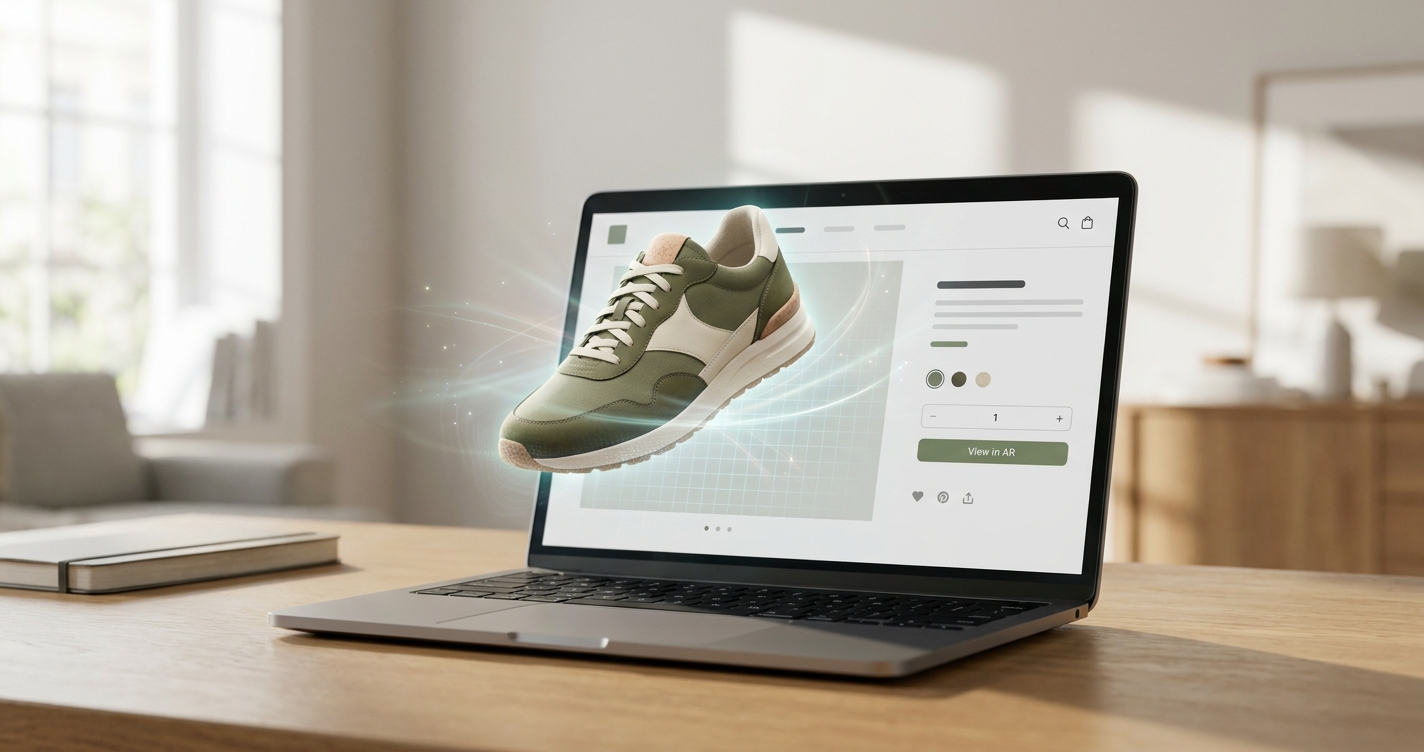
Revolutionizing E-Commerce in 2026: How 3D Product Models Drive Sales
3D product models are no longer a novelty in e-commerce; they are a necessity. By providing immersive, interactive product visualizations, 3D models significantly enhance the online shopping experience, leading to higher conversion rates, reduced returns, and increased customer satisfaction. In 2026, businesses that fail to adopt 3D modeling risk falling behind competitors who are already leveraging its power to create more engaging and persuasive online storefronts. Statistics show that e-commerce sites using 3D models experienced an average of 40% increase in conversion rates compared to those using traditional 2D images.
Key Takeaways
- 3D product models dramatically improve the online shopping experience, leading to increased sales and customer loyalty.
- Implementing 3D visualization can reduce product returns by providing a more accurate representation of the item.
- Advances in AR/VR technology are making 3D models even more accessible and engaging for consumers.
- Cost-effective solutions and outsourcing options are making 3D modeling affordable for businesses of all sizes.
- Optimizing 3D models for various platforms and devices is crucial for ensuring a seamless user experience.
The Power of 3D Product Models in E-Commerce
The e-commerce landscape has evolved dramatically. Static images and basic product descriptions are no longer enough to capture the attention of discerning online shoppers. Consumers demand more interactive and informative experiences that allow them to virtually interact with products before making a purchase. This is where 3D product models come in.
Enhanced Customer Engagement
3D models provide a level of detail and interactivity that traditional images simply cannot match. Customers can rotate, zoom in, and examine products from every angle, as if they were holding them in their own hands. This level of engagement leads to a deeper understanding of the product's features, materials, and design, fostering a stronger connection and increasing the likelihood of a purchase. According to a recent study by Deloitte, websites with interactive 3D models experience 27% higher user engagement rates.
Reduced Product Returns
One of the biggest challenges facing e-commerce businesses is product returns. A significant portion of returns are due to customers being dissatisfied with the product's appearance, size, or features upon receiving it. 3D models help to mitigate this issue by providing a more accurate representation of the product, allowing customers to make more informed decisions. A survey conducted in early 2026 revealed that businesses using 3D models saw an average reduction of 35% in product returns. This not only saves businesses money on return shipping and restocking fees but also improves customer satisfaction and loyalty.
Increased Conversion Rates
Ultimately, the goal of any e-commerce business is to drive sales. 3D product models have proven to be a powerful tool for increasing conversion rates. By providing a more engaging and informative shopping experience, 3D models help to overcome customer hesitation and build trust. A case study by Shopify Plus revealed that merchants who implemented 3D models on their product pages experienced an average of 40% increase in conversion rates. This is a significant improvement that can have a substantial impact on a business's bottom line.
Integrating 3D Models with AR and VR
Augmented Reality (AR) and Virtual Reality (VR) technologies are rapidly transforming the e-commerce landscape, and 3D product models are playing a crucial role in this evolution. By integrating 3D models with AR and VR, businesses can create even more immersive and engaging shopping experiences.
AR for Try-Before-You-Buy
AR allows customers to overlay 3D models of products onto their real-world environment using their smartphones or tablets. This enables customers to virtually "try on" clothing, "place" furniture in their homes, or "test drive" cars before making a purchase. This is particularly valuable for products that require visualization in a specific context. For example, furniture retailers can allow customers to see how a sofa would look in their living room, or clothing retailers can allow customers to virtually try on a dress before buying it. In 2026, AR-enabled e-commerce apps are projected to generate $30 billion in revenue, according to Statista.
VR for Immersive Shopping Experiences
VR takes the shopping experience to the next level by creating fully immersive virtual environments. Customers can enter virtual stores, browse products, and interact with them in a realistic and engaging way. This is particularly useful for complex or high-value products that require a more detailed explanation or demonstration. For example, a car manufacturer could create a VR showroom where customers can explore different models, customize their features, and even take a virtual test drive. While VR adoption is still in its early stages, it has the potential to revolutionize the way we shop online. Experts at Gartner predict that by 2028, 15% of large retailers will be using VR to enhance the customer experience.
Optimizing 3D Models for AR/VR
To effectively integrate 3D models with AR and VR, it's important to optimize them for these platforms. This includes reducing the file size of the models to ensure smooth performance, optimizing the textures and materials for realistic rendering, and ensuring that the models are compatible with the AR/VR software and hardware being used. Tools like Unity and Unreal Engine are commonly used for creating and optimizing 3D models for AR/VR experiences.
Implementing 3D Product Models: A Practical Guide
Implementing 3D product models in your e-commerce store may seem daunting, but with the right approach, it can be a straightforward process. Here's a practical guide to help you get started:
Choosing the Right 3D Modeling Approach
There are several ways to create 3D product models, each with its own advantages and disadvantages.
- 3D Scanning: This involves using specialized equipment to capture the physical dimensions and shape of a product. 3D scanning is ideal for complex or irregular shapes but can be expensive and time-consuming. High-quality 3D scanners from companies like Artec 3D range from $10,000 to $50,000.
- 3D Modeling from CAD Files: If you already have CAD (Computer-Aided Design) files of your products, you can use them as a basis for creating 3D models. This is a cost-effective option, but it requires expertise in 3D modeling software.
- 3D Modeling from Scratch: This involves creating 3D models from scratch using 3D modeling software like Blender, Maya, or 3ds Max. This is the most flexible option but requires significant skill and time.
- Outsourcing: You can outsource the creation of 3D product models to specialized 3D modeling agencies or freelancers. This can be a cost-effective option, particularly for businesses that lack in-house 3D modeling expertise. Platforms like Upwork and Fiverr connect businesses with experienced 3D modelers. Costs can range from $50 to $500 per model, depending on complexity.
Optimizing 3D Models for E-Commerce
Once you have created your 3D product models, it's important to optimize them for e-commerce use.
- Reduce File Size: Large 3D models can slow down your website and negatively impact the user experience. Optimize the models by reducing the polygon count and compressing the textures. Aim for file sizes under 5MB. Tools like MeshLab can help with polygon reduction.
- Choose the Right File Format: The glTF (GL Transmission Format) is the most widely supported and efficient file format for 3D models on the web. Other common formats include OBJ and FBX, but glTF is generally preferred for its performance and compatibility.
- Optimize Textures and Materials: Use high-quality textures and materials to create realistic and visually appealing 3D models. However, be mindful of file sizes and optimize the textures for web use.
- Implement Lazy Loading: Lazy loading allows you to load 3D models only when they are visible on the screen, which can significantly improve page load times.
Choosing the Right Platform and Plugins
Several e-commerce platforms offer built-in support for 3D models or provide plugins that enable 3D visualization.
- Shopify: Shopify offers native support for 3D models and provides a variety of apps that enhance the 3D shopping experience. The Shopify AR app allows customers to view products in AR using their smartphones.
- WooCommerce: WooCommerce offers several plugins that allow you to integrate 3D models into your product pages. Plugins like "Product 3D Viewer" and "VR View" provide interactive 3D visualization capabilities.
- Magento: Magento offers a robust platform for e-commerce businesses, and several extensions are available for integrating 3D models. The "3D Product Configurator" extension allows customers to customize products in 3D before purchasing them.
Measuring and Analyzing Results
After implementing 3D product models, it's important to track your results and analyze the impact on your key metrics.
- Conversion Rate: Monitor your conversion rate to see if 3D models are helping to increase sales.
- Bounce Rate: Track your bounce rate to see if 3D models are helping to keep customers engaged on your website.
- Time on Page: Monitor the average time spent on product pages with 3D models to see if customers are spending more time interacting with the products.
- Return Rate: Track your return rate to see if 3D models are helping to reduce product returns.
By carefully monitoring these metrics, you can gain valuable insights into the effectiveness of your 3D product model strategy and make adjustments as needed.
The Future of 3D in E-Commerce
The future of 3D in e-commerce is bright. As technology continues to advance, we can expect to see even more innovative and immersive applications of 3D models.
AI-Powered 3D Modeling
Artificial intelligence (AI) is playing an increasingly important role in 3D modeling. AI algorithms can automate many of the manual tasks involved in creating 3D models, such as generating textures, optimizing meshes, and even creating entire 3D models from 2D images. This will make 3D modeling more accessible and affordable for businesses of all sizes. Companies like Luma AI are pioneering AI-powered 3D reconstruction.
Personalized 3D Experiences
In the future, we can expect to see more personalized 3D shopping experiences. AI algorithms can analyze customer data to create personalized 3D models that are tailored to individual preferences. For example, a clothing retailer could use AI to generate 3D models of clothing that are styled to match a customer's personal taste.
3D Printing and On-Demand Manufacturing
3D printing is revolutionizing the manufacturing industry, and it has the potential to transform e-commerce as well. By integrating 3D printing with e-commerce, businesses can offer customers the ability to customize products and have them 3D printed on demand. This would allow for a level of personalization and customization that is simply not possible with traditional manufacturing methods.
Frequently Asked Questions
What are the benefits of using 3D product models in e-commerce?
3D product models enhance customer engagement, reduce product returns, and increase conversion rates. They provide a more accurate and interactive representation of products compared to traditional 2D images, leading to a better shopping experience. This ultimately results in higher customer satisfaction and increased sales for businesses.
How much does it cost to create 3D product models?
The cost of creating 3D product models varies depending on the complexity of the product, the chosen modeling method (scanning, CAD, or from scratch), and whether you outsource the work. Costs can range from $50 for simple models to $500 or more for complex models requiring specialized expertise. Outsourcing to freelancers or agencies can be a cost-effective solution.
What file format should I use for 3D product models?
The glTF (GL Transmission Format) is the recommended file format for 3D product models in e-commerce. It is widely supported, efficient, and optimized for web use. Other formats like OBJ and FBX can also be used, but glTF generally offers better performance and compatibility.
How can I optimize 3D models for my e-commerce website?
To optimize 3D models for e-commerce, reduce the file size by minimizing polygon count and compressing textures. Choose the right file format (glTF), optimize textures and materials, and implement lazy loading to improve page load times. These steps ensure a smooth and engaging user experience.
Which e-commerce platforms support 3D product models?
Shopify, WooCommerce, and Magento are popular e-commerce platforms that support 3D product models. Shopify offers native support and apps for AR viewing, while WooCommerce has plugins for 3D visualization. Magento provides extensions for advanced 3D product configuration.
Conclusion
In 2026, 3D product models are no longer a "nice-to-have" but a "must-have" for any e-commerce business looking to thrive in a competitive market. By providing immersive, interactive, and informative shopping experiences, 3D models can significantly enhance customer engagement, reduce product returns, and increase conversion rates. Embrace the power of 3D and transform your e-commerce store into a dynamic and engaging online destination. Start by exploring 3D modeling options for your products today!